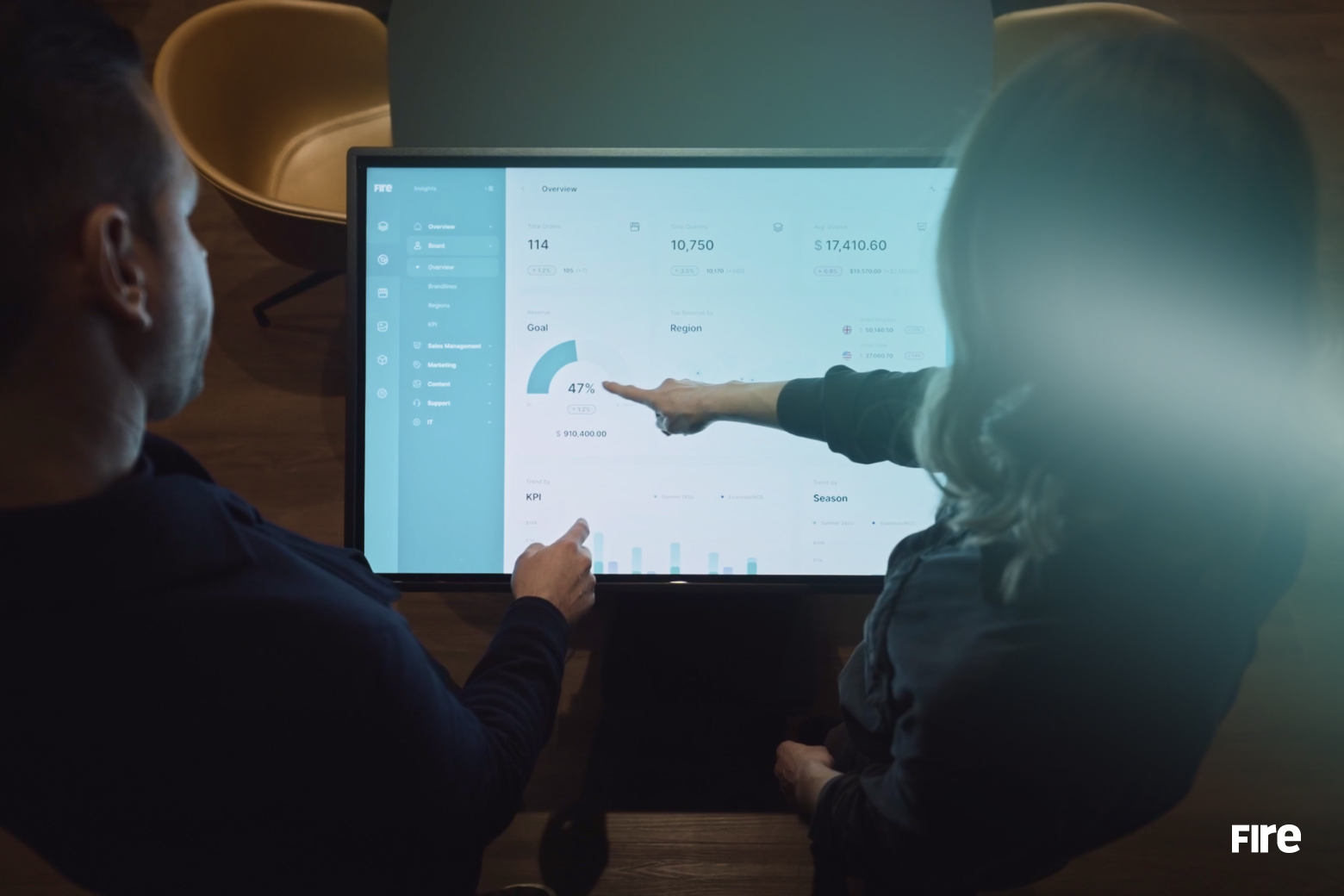
Connect Everything. Replace Nothing.
The biggest fear: replacing existing systems. The reality: a modern AI platform connects to existing infrastructure, adding an intelligence layer without disrupting operations. FIRE's proprietary middleware connects to SAP, Microsoft Dynamics, Infor, and Sage — bidirectional, real-time, in weeks not months.
Why Fashion Needs a Platform, Not More Tools
The fashion industry has accumulated an average of 12–15 disconnected software tools per brand. Each was purchased to solve a specific problem — showroom management, order processing, analytics, CRM, inventory tracking. Yet together they create a problem larger than any individual tool solves: data fragmentation. Every tool creates its own data silo. Every integration between tools introduces latency, quality degradation, and maintenance overhead.
A platform approach eliminates this complexity architecturally. Instead of connecting tools that were never designed to work together, a platform provides one unified system where every function operates on shared data. FIRE demonstrates this principle at scale: showroom, ordering, analytics, reorder management, and ERP connectivity operating as one system — processing nearly $10 billion in annual wholesale transactions for Hugo Boss, Bugatti Shoes, Drykorn, LVMH and 100+ leading fashion and lifestyle brands worldwide (projected estimate).
The platform advantage compounds over time. Every transaction enriches a shared intelligence layer. Every season adds comparative data that improves predictions. Every new market connected to the platform deepens the analytical capability. After 2–3 seasons, the platform delivers insights that no combination of individual tools could produce — because the intelligence emerges from connections between data points, not from the data points themselves.
The AI Architecture Advantage
Most fashion brands attempt to add AI capabilities on top of existing fragmented infrastructure. This approach fails because AI models require clean, structured, comprehensive data — exactly what fragmented systems cannot provide. The result: expensive AI investments that produce unreliable outputs, leading organisations to abandon automation and revert to manual processes.
FIRE was built with AI architecture from day one. Every wholesale interaction through the platform generates structured, machine-readable data that feeds the intelligence layer automatically. There's no ETL pipeline, no data cleaning step, no manual preparation. Intelligence is a natural byproduct of daily operations. This architectural decision means AI capabilities improve automatically with every season: descriptive analytics in season one, diagnostic intelligence in season two, predictive recommendations in season three, and automation capabilities emerging by season four.
The practical impact is measurable: 25–35% improvement in forecast accuracy, 15–25% increase in preorder value through personalised recommendations, 30–40% reduction in sample costs, and complete elimination of manual data reconciliation. These improvements compound: better predictions lead to better assortments, which generate better sell-through data, which further improves predictions (projected estimate).
From Implementation to Intelligence: The FIRE Timeline
FIRE's 10-week implementation timeline reflects a fundamental advantage: the platform replaces fragmented tools rather than integrating them. Week 1–3: ERP middleware configuration and product data migration. Week 4–6: Digital Showroom setup and user training. Week 7–9: parallel operation with existing systems. Week 10: go-live. From the first transaction, every interaction generates structured, AI-ready data.
The intelligence progression follows a predictable curve. Month 1–6: baseline data capture builds the foundation. Month 7–12: descriptive analytics reveal patterns invisible in fragmented systems. Month 13–18: predictive models begin outperforming manual processes. Month 19–24: automation opportunities emerge as model confidence exceeds human benchmarks. By month 30, the system operates with increasing autonomy — recommending assortments, triggering reorders, and optimising pricing with minimal human intervention.
The brands that will lead their categories by 2028 are implementing platforms today. Every season of delay is a season of AI training data permanently lost. The question isn't whether to adopt a platform — it's whether you can afford to wait while competitors build intelligence you cannot replicate (projected estimate).